The Mountain Communities Fire Safe Council (MCFSC) has access to nearly $2 million of federal funding to help harden homes, to make a home more resilient to potential wildfire damage. But the Federal Emergency Management Agency (FEMA) needs to approve the projects by May 31.
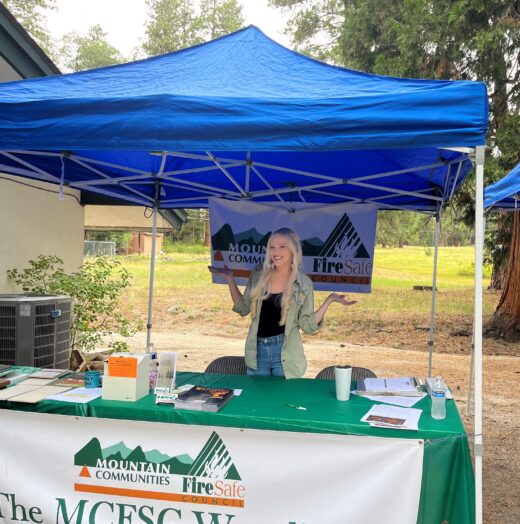
PHOTO COURTESY OF MCFSC
Approval includes an MCFSC inspection and three bids from approved contractors to do the work. Then the proposed project is submitted for federal approval.
If the project is approved, the homeowner is responsible for paying the contractor as the work is completed. Upon full completion of the project, 75% of the cost will be reimbursed. After the project is completed, 65% will be reimbursed to the homeowner. The remaining 10% will be given when the grant program is closed in 2025.
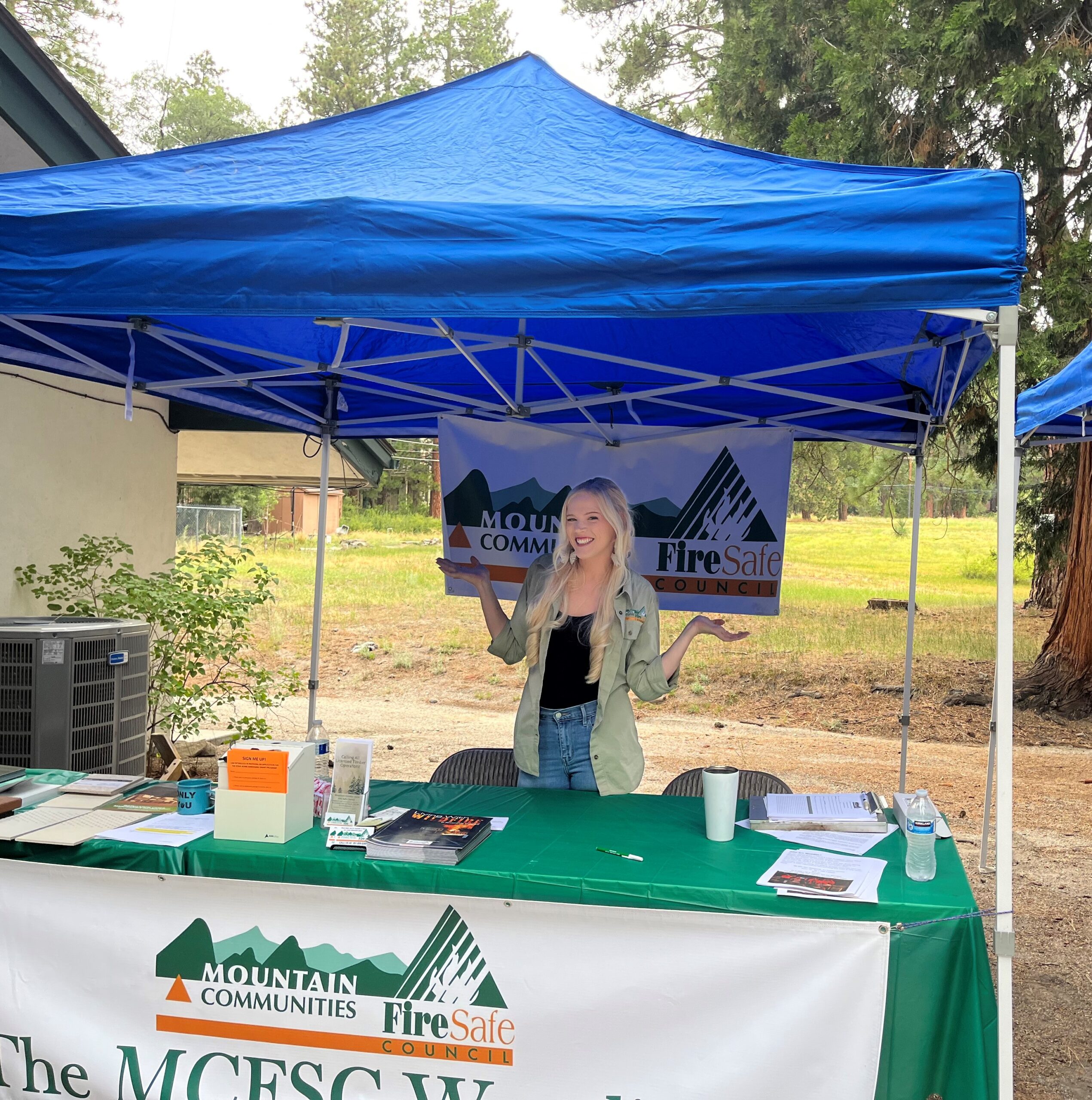
To request an inspection, call Field Specialist Katrina Whitaker at 951-468-4142. An appointment for an inspection will be made and Whitaker will bring an application with her.
It is the embers or small flames that initiate the destruction of most homes from wildfire. Home hardening projects can vary. The simplest is to avoid storing combustible materials on or under decks.
MCFSC can help with many projects to improve a home’s resilience to wildfire. Examples include replacing roofs, decking or siding with a more fire-resistant material, replacing old windows with double-paned glass, covering soffits and eaves to prevent debris build-up and ember intrusion, installing spark arrestors and bird stops.
The roof is one of the most vulnerable areas of a house. From 2013 through 2016, MCFSC had access to grant funding to replace wood or cedar shake shingles. More than 100 homes on the Hill had their roofs replaced.
Other parts of the house, such as vents, eaves, soffits, chimneys and windows, also are vulnerable to fire itself or the heat from the fire. Whitaker noted the prevalence of single-pane windows which can explode and expose the house interior to nearby flames or wind-blown embers.
Eaves and soffits without shielding also are potential entryways for embers.
Whitaker also emphasized the need to inspect the house’s siding. She has frequently seen gaps or, even, holes in the siding that are potential fire entries.
Areas that need hardening to protect the house and that homeowners often forget include decks, fences, the garage and even the driveways.
One of the most critical protective actions is defensible space. Homeowners should conduct abatement within 100 feet of structures on their property. Of the more than 100 inspections Whitaker conducts annually, she has found that almost 100% need to implement, if not improve, the defensible space surrounding the home.
“Defensible space is the buffer you create between a building on your property and the grass, trees, shrubs, or any wildland area that surround it. This space is needed to slow or stop the spread of wildfire and it helps protect your home from catching fire —either from embers, direct flame contact or radiant heat. Proper defensible space also provides firefighters a safe area to work in, to defend your home,” is the advice Cal Fire offers on its website.
Appropriate defensible space, three zones within 100 feet of the home, is required by state law. Visit the Cal Fire website, www.readyforwildfire.org/prepare-for-wildfire/get-ready/defensible-space.
A video as well as a low-cost retrofit list are available at the Cal Fire home hardening website at www.readyforwildfire.org/prepare-for-wildfire/get-ready/hardening-your-home.
Another source for information is the U.S. Forest Service’s “Wildfire Risk to Communities” website at wildfirerisk.org/ with interactive maps, charts and resources to help understand, explore and reduce wildfire risk.