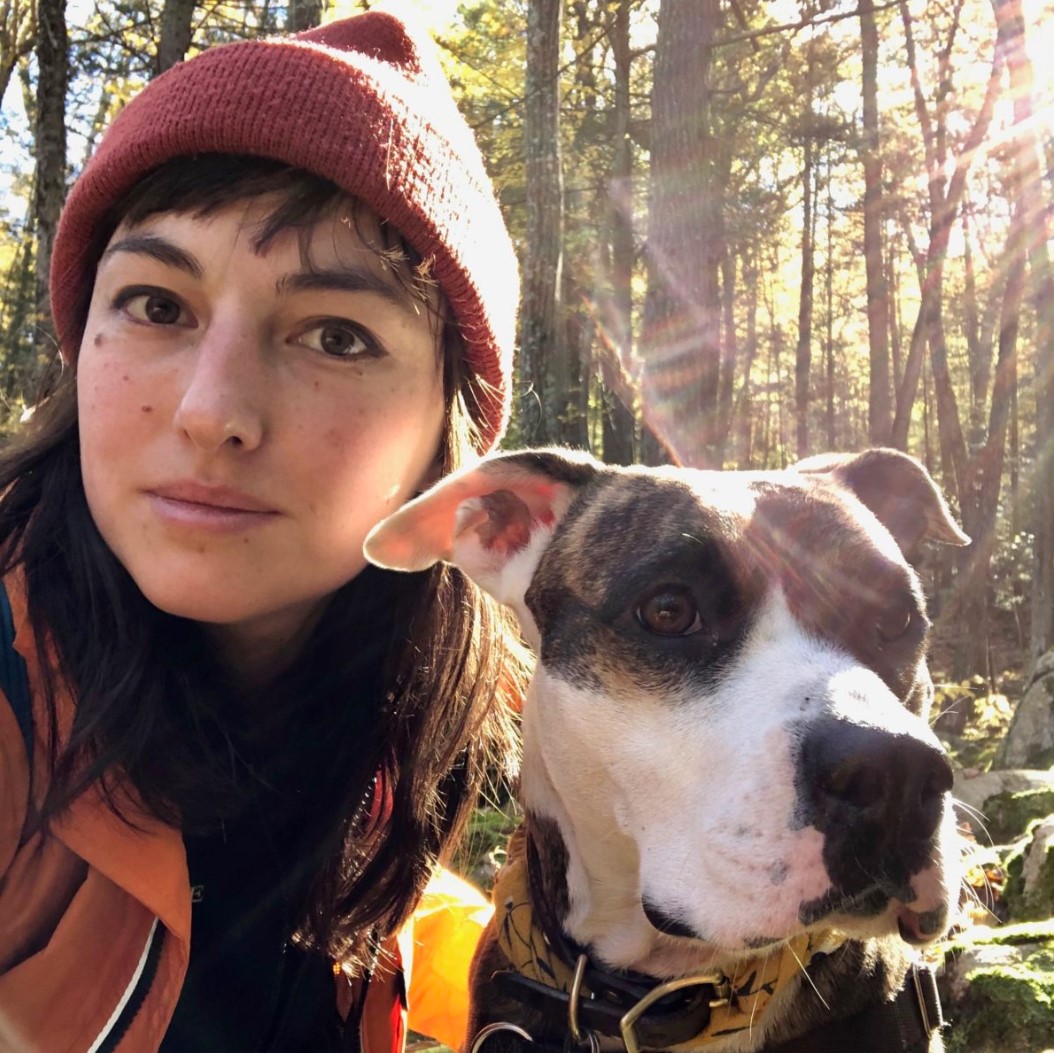
Living Free Animal Sanctuary has a new executive director, Sophia Dean. Dean was promoted from within the organization, having served most recently as marketing coordinator.
PHOTO COURTESY OF LIVING FREE
Born in New Mexico, where she learned to love horses, she grew up in New Jersey and spent eight years in New York City. There she continued to work with animals, walking and training dogs. She also became a chef and learned to market the restaurants where she cooked. She moved to Mountain Center in March 2019, and began volunteering at Living Free. The Crier caught up with Dean last week and interviewed her there.
TC: Are you happy with your new job?
SD: Yes. I moved here to Mountain Center with the purpose of working with animals again. I moved in, and right behind my house was Living Free. It felt serendipitous. I’m just very grateful to have this position where I can be the voice and advocate for the animals, the land, the volunteers and staff.
TC: You are Bicoastal?
SD: I was living here for four years, then, due to family issues, moved back to the East Coast, intending to stay close to Living Free, helping with marketing and fundraising as a consultant. Then the board of directors approached me with the idea of taking on the role of executive director because I know this place so well. Nice thing about my experience: I grew up riding horses, then walked and trained dogs in New York. I worked in the kennel here for a year, then moved to the marketing team. It almost felt inevitable. When I first started here, I met Randall, [former Executive Director Charles Randall Harris.] He had lived in New York. He got excited and wanted me to get more involved when he learned I had gotten experience in New York working as a chef and doing marketing for the restaurants where I worked. He liked the New York mindset. When he died [in November 2020], he put it in a note that he wanted me on a managerial track.
TC: Randall was a mentor?
SD: Absolutely. I was just talking about him with our stable manager Amara. She was mentored by him as well. It’s just wonderful: He had a vision, and there’s a strong desire to carry on what he intended to do here. He did a lot of great things.
TC: What can you say about Randall’s legacy here?
SD: Living Free has gone through many changes throughout the years, different people. When Randall took the reins, Living Free was struggling a bit. He really turned things around; adoptions skyrocketed, morale went up, he was a good leader. He started the War Horse Creek (WHC) program. That was the main thing he wanted to see take off. We were able to make that happen. As a group, we all got behind it after he died.
TC: That was an expansion of your mission?
SD: It was. This place has always had horses around it. Our founder Emily Jo Beard started the place with dogs and cats [in 1980], but her vision always encompassed horses as well.
TC: War Horse Creek completes that?
SD: Yes, it does. We’re working on making WHC, though geared towards veterans, available to the community and other groups that would benefit from the clear horse/human connection, the power of spending time around a horse, the therapeutic benefit. We’ve opened it up to groups of first responders. We’re looking to continue making this method of rehabilitation and therapy available.
TC: Your new role started when?
SD: In August.
TC: What is the size of the operation?
SD: We are down to 21 dogs. We are about to rescue some more. We have 92 cats. We have six horses that are living free. We also have four that are staff and volunteer horses. And two donkeys.
Dean recited these figures reflexively, no doubt able to name many of her animal charges. When asked about humans, she had to stop and count, and answered later: “Our official count is 16 staff members on property and around 60 volunteers.”
TC: What is the acreage?
SD: 155.
TC: This place runs on donations?
SD: Grants and donations are our bread and butter. I know the economy has been crazy for everybody … inflation has meant that the cost of the animals’ food, hay for horses, cat litter, everything has gotten more expensive. We had a “fun” time with our fire insurance. I think everyone on this Hill can relate to that.
TC: What’s the plan for dealing with that?
SD: We repaired our roofs; we did a bunch of things to make sure we are complying. Our maintenance crew did an amazing job with abatement. Living Free has always been a “stronghold.” During the Cranston Fire, they staged here in order to fight the fire and prevent it from going up the hill. This whole year we have been working on it. We are now paying the final amount to solidify the new coverage.
TC: What are your fundraising hopes?
SD: My biggest hopes are to see this place start to thrive again. It’s been a rough couple of years. We have animals here that this is their home; some are permanent residents. That’s part of our role, to be a home for them for the rest of their lives.
TC: Some donors leave endowments for the care of their companion animals?
SD: Yes, and sometimes our rescues are not easy to adopt, and they are welcome to live out their lives at the sanctuary.
TC: Can you tell us more about the fundraising?
SD: The majority of our donations come in through our website. Also, a lot of people mail in donations. People come for tours and donate then. Our social media is our main way of pulling in donations, especially our Facebook page.
TC: Grants are important?
SD: Yes, we are funded by a number of grants.
TC: You do some of the grant writing?
SD: Yes, I’ve done a number. I was doing it in my capacity of marketing coordinator.
TC: What challenges did the pandemic present Living Free?
SD: Everybody had to close their doors to the public. We did have a good number of adoptions, but what has happened to a lot of rescue organizations is that as people have returned to the office, they can no longer take care of their “COVID pets.”
TC: So there was a boom and bust?
SD: All the shelters we draw from are super overcrowded with large dogs, both Palm Springs Animal Shelter and Coachella Valley Animal Campus. We’ve been taking a lot of large dogs from them to alleviate their overcrowding. They need the kennel space.
TC: Any parting words for our readers?
SD: I want the community to know, Living Free has been part of this community for 43 years. We want to be as much a part of it as possible. We want to collaborate, open our doors. We’re doing “Oktoberfest” in Idyllwild [Oct. 14 at the Rustic]. Proceeds will go to Living Free. Last year we did “Pints in the Pines.” That was really good. The Wild Idy team were amazing. I think we got like $7,000. All of it went to Living Free, to our animals. This week I was meeting people in town. People feel excited to get to know Living Free again. We’re getting back into it; we’re re-integrating ourselves with the community. Our tagline is “A refuge for those in need of a second chance.” I often see that applies not only to the animals but the veterans who come here, and also to this place. It has had many leaders, a lot of changes. We’re rising up again.