With extremely hot weather arriving in California last week, the critical and obvious tips are to stay cool, stay hydrated and look after friends and family.

In anticipation, both the county and the state posted warnings and suggestions for dealing with the temperatures.
The state created a website: heatreadyca.com/.
The county announced the availability of numerous cooling centers, including the Idyllwild Library. This cooling sanctuary is available from noon to 5 p.m. Monday to Friday. Other county cooling centers may be found at https://capriverside.org/cool-centers.
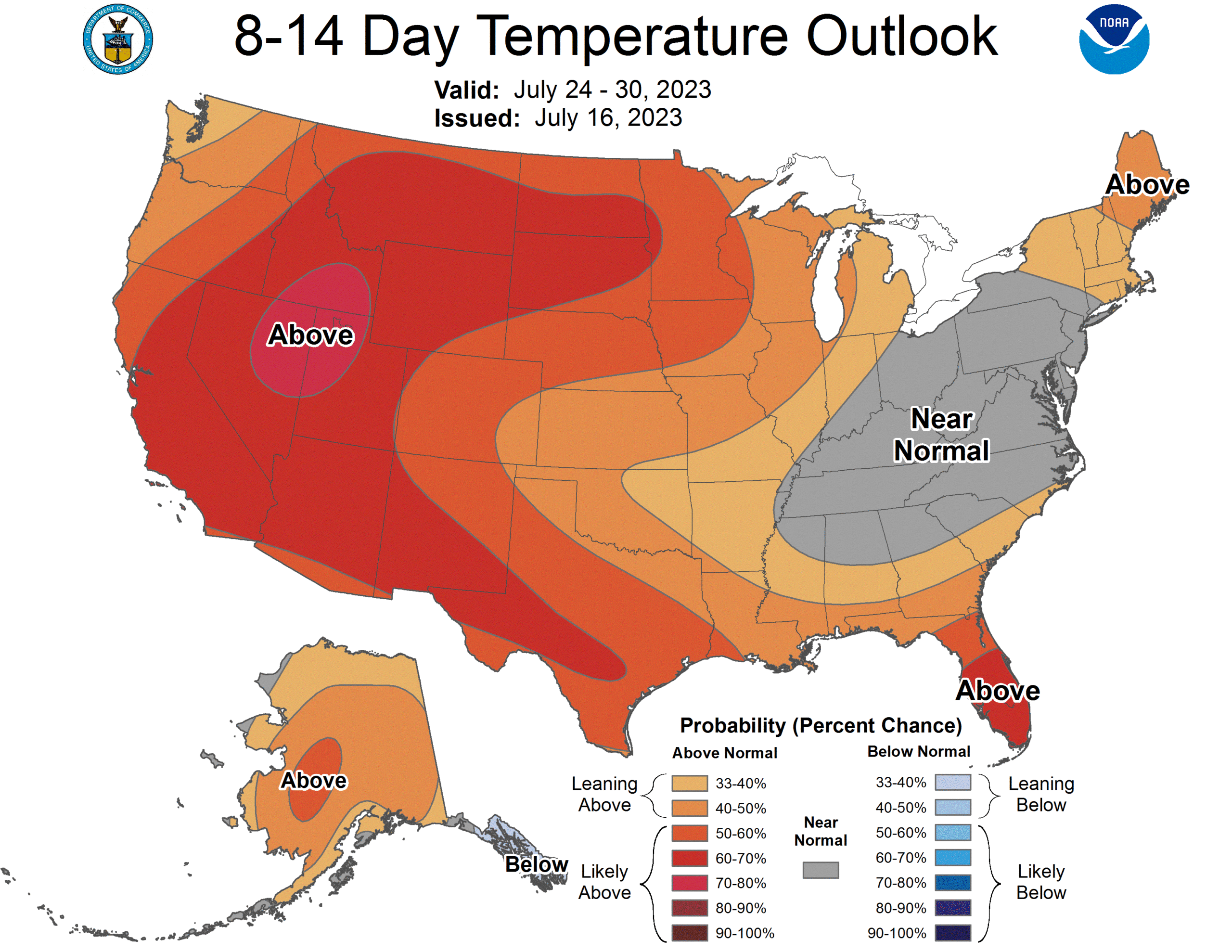
In advance of the scorching heat, meteorologists from the National Weather Service (NWS) and academia posted and tweeted warnings of the coming record-breaking heat.
In compliance, NWS recorded a 100-degree temperature in Idyllwild last Saturday, breaking the previous recorded high of 97 degrees in 2003.
Although the Idyllwild Fire Department only recorded a high temperature of 98 degrees Saturday, NWS’s Anza recording station got to 104 degrees in the late afternoon and Keenwild Fire Station recorded 100 degrees shortly after noon.
And it is not over. Sunday, July 16, NWS issued an excessive heat warning for much of the Southern California mountain areas, specifically including Idyllwild and Pine Cove. “Excessive heat warning remains in effect until 8 p.m. PDT, Tuesday … Dangerously hot conditions with high temperatures of 95 to 105 below 5000 feet.”
Then Monday, July 17, NWS’s longer term forecast reported, “The current deterministic forecast has more widespread moderate Heat Risk for Thursday into the weekend for the valleys, some inland coastal areas, and the lower elevations of the mountains which would support a return of Heat Advisories for at least some of those areas if the currently forecast warming holds.”
A week ago on July 11, preceding the heat wave, Daniel Swain, a climate scientist in the Institute of the Environment and Sustainability at the University of California, Los Angeles, said as it approached, “The next heat wave will be more significant. It has the potential to break quite a lot more records … California’s temperatures are about to change. Fuel moisture is about to change. This not a brief one-to-two-day event, but a prolonged multiday event that might last considerably longer than a week.”
And the NWS’s San Diego Meteorologist Alex Tardy said July 11, “There is the potential for extreme and extended prolonged heat wave … from July 12 through July 19 or longer and near record highs July 15 and 16.” On July 16, nearly a week later, the NWS forecast for next week was, “Strong high pressure aloft will maintain hot weather inland into next week, with periods of high clouds.”
In anticipation of this dangerous heat, Gov. Gavin Newsom announced his “Heat Ready” campaign last Monday.
“The impacts of climate change have never been more clear — the hots continue to get hotter in our state and across the West putting millions of Californians at risk,” said Newsom in his news release. “California is launching Heat Ready CA as another tool in the state’s arsenal to protect people from extreme heat. We’re asking everyone to stay alert to changing weather and take the necessary steps to keep themselves and their families safer from deadly heatwaves.”
The two-year, $20 million campaign focuses on heat-sensitive groups at highest risk, including those 65 years of age or older, workers, and individuals with chronic illness, disabilities or who are pregnant. The campaign is part of the governor’s Extreme Heat Action Plan, which has access to more than $400 million, to guide the state’s response to heatwaves, according to the release.
“Heat-related illnesses such as dehydration, heat exhaustion and heat stroke, as well as respiratory problems, are among the potentially dangerous effects of extreme heat,” said California Health and Human Services Secretary Dr. Mark Ghaly.
The Public Policy Institute of California recently released a poll of state residents and asked several questions about the weather.
Is extreme weather a problem? “Yes” said 35% of those surveyed. Another 41% identified it as “somewhat of a problem” and only 24% don’t perceive these extreme events as any kind of problem.
Nearly 45% of residents acknowledged they have been personally affected by some type of extreme weather in the past two years.
The survey noted, “To prepare for the future effects of climate change, such as flooding, storms, and wildfires, a solid majority of Californians (62%) say it is very important for the state government to pass regulations and spend money now on these efforts (27% somewhat, 11% not too important). Majorities across demographic and regional groups say it is very important, while partisans are divided.”