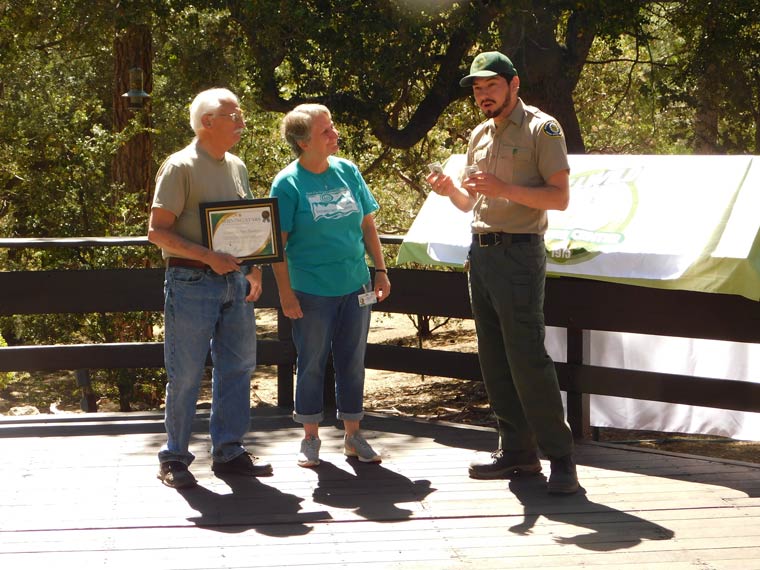

This week the Crier spoke with Steven Proffitt, aka Ol Man Proffitt, a transplant putting out new roots in our community, a retired journalist with new stories to tell.

Proffitt was born 70 years ago in Houma, Louisiana, to a native Cajun mother and father who came south from Iowa after World War II to work the oil fields. The family also spent time in Texas, California and London.
Growing up, young Proffitt had his ear to that keyhole to the wider world — radio. “Growing up in Louisiana I listened to the Black station; at that time they actually called it ‘race music,’ later R&B. They would transmit church services live; I heard some gospel music. There was a song called ‘Work with me Annie’ [Hank Ballard and the Midnighters]. Then there was another called ‘Annie Had a Baby.’ Figure that one out. There was Cajun music and Zydeco, two different things.”
Cajun music has its roots in Nova Scotia, its flower in south Louisiana. Zydeco is an originally African American style fusing creole with R&B, and soul.
“As I got older, my tastes became more main stream, top 40. At 10 or 11 was when the Beatles came along. I also listened to country music, not as much as when I got older.”
His first instrument was the child-friendly ukulele. “My folks got me a ukulele when I was 5, maybe 6. I started playing, I had a little book. I played in the school band, the trumpet. Around sixth or seventh grade it was no longer cool to walk around with a trumpet, I felt, so I talked them into buying me a guitar, an electric guitar. I played with friends in the garage as we did at that time.
He went to college and earned bachelor’s and master’s degrees in fine arts (Stephen F. Austin University and University of Northern Iowa). At Austin, he continued to develop as a musician. He recalled “a number of pretty good musicians there I started playing with, including a guy named Rodney Crowell — well-known singer/songwriter. Probably in my junior year Rodney and a couple of other friends were like, ‘We’re going to Nashville; come with us, we’re going to make it in the music business.’ I was not ready; I was too close to graduation. They went to Nashville and starved for a while. Rodney ended up in Emmylou Harris’ The Hot Band.” After college, Proffitt played very briefly with Kinky Friedman.
Proffitt describes his situation then: “I was unemployable. I tried making it as a musician, but my questionable talents and bourgeois nature made that seem a too-difficult path. In a naive attempt to capitalize on my training, I applied for work in the art department at the public television station in Dallas. They noticed I possessed a Third-Class Radio Operators license. (I had been a DJ at a tiny radio station while an undergrad, and in those ancient days, the license was a requirement.)”
The station was starting as a public radio outlet. They offered him the title of producer. “That sounded like limousines and cigars, so I accepted the offer. For $250 a week, I was required to be at work at four in the morning, running ‘the board,’ cutting tape, and servicing the hot-tempered news director, who liked to throw pencils at me when I screwed up. I screwed up a lot.”
He quickly made the transition to reporter and began contributing stories to the then-nascent National Public Radio (NPR). “I also got a slot on the station’s nightly television news broadcast, ‘Newsroom,’ hosted by Jim Lehrer. The program staff was a cadre of veteran print reporters. They kindly gave me a postgraduate course in journalism.”
In the early 1980s, he was hired by NPR as an editor and producer in Washington, DC. “It was a time when NPR still fully embraced creativity and experimentation. I thrived in that environment, producing a variety of cultural pieces that drew on my interest in art, music and humor.” In 1984, NPR moved him to Los Angeles to help build out its bureau there. He became a general assignment reporter “covering all manner of social and natural disasters, interviewing politicians and movie stars and trying to keep up with breaking news.”
Asked if he would consider reporting and producing news across these different platforms a high-pressure job, Proffitt agreed: “Hell, yeah. There’s always deadlines; there are some times you wish you had more time, and some times the deadline is a blessing. I came to rely on deadlines. There is a difference between doing a profile or feature, and doing a breaking news piece, where you may literally have 10 minutes to figure out what you are going to say and how you are going to say it.”
In the late 1980s, he moved to CBS news where he produced a program hosted by Charlie Rose, and began contributing interviews to the LA Times Sunday Opinion section. His dozens of interviews there included names like historian Doris Kearns Goodwin, Surgeon General Jocelyn Elders, Vice President Dan Quayle, political strategist James Carville, then-freshman Sen. Dianne Feinstein and Playboy publisher Hugh Hefner.
These interviews are a course in the reporter’s craft, the even-handed, respectful tone that editors love. The interviewer’s opinions are not the story, and there are always opinion pieces out there, but if a controversial figure is allowed to open up, readers may learn a few things. I asked Proffitt about this tone. “It’s kind of an aspiration. There’s no such thing as objectivity; as soon as you observe something you change a thing.” As to what we now call “bothsidesism” he said, “if you interview someone about the world being round and then have to go interview someone else who says it’s flat … there are rarely just two sides to a story. The art is in unraveling the nuance.”
I asked him for advice to anyone setting out do an interview. “I like to look them in the eye. If you can do an interview in person there is a whole other level, plus if you interview them in their home there’s detail, what I call color.” [Disclosure: this interview was done by email and phone.]
In the 1990s, his interest in computers brought opportunities in the wildly expanding field. “I joined a little startup R&D [research and development] operation funded by the Japanese ad giant, Dentsu. Our charter was to explore this new thing called The Internet. Specifically, we were tasked with trying to understand how it might alter advertising, and commerce in general. We quickly morphed from a research operation into a profit center, building early Web sites for Dentsu client firms such as Sony and Canon. After several years of spectacular growth, I could see that we were fast being outgunned by VC-funded [venture capital] firms with legions of engineers and vast technical expertise. So, I joined one. It was called Sapient. The company stock soared. It was listed on the S&P. Then, with the dot-com crash, it pretty much collapsed.”
Fortunately, NPR was there for him. It was “about to launch a new, midday news program, ‘Day to Day.’ I helped develop the program, which premiered in 2003, and spent six happy years making radio, until the network pulled the plug after the economic unpleasantness of 2008. It was a very difficult time for me, but eventually I landed at LA’s big public radio news station, KPCC, where I worked as a producer and program developer until I retired in 2017.” His work there included production of “Take Two” (nee “The Madeleine Brand Show”), a daily news program. “[It was] the highest rated public radio news program in the region.”
With retirement looming, Proffitt began to search for a new home. “As much as I love LA, I knew it wasn’t realistic to remain there. Beyond that, I was pretty agnostic. I looked in Washington and Oregon, in the wine country around Paso Robles, and even in the mountains of North Carolina. Nothing really grabbed me. One night I remembered long-ago visits to Idyllwild with a friend who had an aunt and uncle who lived here. I got on Zillow and found a cute little cabin that was less than the cost of a cramped studio apartment in a dicey LA neighborhood. I drove up one Sunday morning just after the New Year. It was a perfect day. The cabin was actually nicer than the pictures made it look. I made an offer on the spot. The agent called me on the drive home and told me it had been accepted. I still had almost a year to work, so I had time to make a nice transition. When I finally said goodbye to LA in September 2017, I felt like I was coming home.”
Here in Idyllwild, he began to build a new life foregrounding his original interests in art and music. “I picked up a guitar and began singing at the legendary Backroom (RIP). People seemed at least amused by my songs and the old guy singing them. No one threw anything at me. So, I began to play at other venues around town, and took on the sobriquet Ol Man Proffitt. I drew on my Cajun roots, threw in a little performance art and ‘stand-up tragedy.’ I’m not very serious about it, but it does give me a creative outlet, and provides an opportunity to meet lots of people, including the uncanny number of highly skilled musicians who call Idyllwild home. (More talented guitar players per square inch than anywhere west of Nashville.)”
Asked about the complementarity between the craft of the reporter and the way of the songwriter, and whether he may feel “depressurized” in his new, freer role, he answered, “I hadn’t thought of it that way, but yes. There are elements of storytelling that translate into songwriting; sometimes I am telling a story, sometimes it’s not a process that is rational.” His songwriting is full of a sense of place, details that anchor a narrative in real cultural geography, and characters that, if they aren’t real, the listener makes them real.
Here in Idyllwild, he also is putting his arts training to work, both producing a body of work including painting, photography and digital media (find him as Ol Man Proffitt on Facebook) and volunteering with the smARTs program, bringing arts to the Idyllwild School. “I think it’s great. California just passed Prop 28 that creates funding for arts in the schools, but there hasn’t been much funding for the arts in Idyllwild or Hemet. It’s a great organization; it doesn’t take much to help. These kids are so happy; if I brought bags of candy and chocolate, they couldn’t be happier than when I bring a bag of paints. It’s not very frequent, a couple times a month for an hour, but I think it means a lot to them. I always ask them what they learned, and they always amaze me with their answers.”
When asked about his own beginnings as an artist he explained, “I was always interested in art. I didn’t do it too much as a child; I didn’t think of myself as an artist until I got to college. I started taking art classes and I loved it. Particularly for broadcast I think my art training was really valuable because it allowed me to think about putting stories together with audio or visuals differently, not as linearly as other people were working.”
About his new home, Proffitt said, “Of course, I love the peace and quiet of nature here. Things like the Halloween and July 4th parades are priceless. Tonight’s tree lighting is another example. Though the nightlife here has been decimated by the Great Triple Disaster (fire, flood, pandemic) it’s still possible to take myself out for an evening and have some satisfying random social interaction.”
Offered a chance to “soapbox” for a moment, he contributed these suggestions: “If I could be the mayor for a time (without having to transition as a canine), I’d try to encourage more diversity, especially among the many fine cultural organizations we’re lucky to have here.”
Stepping into a possibly controversial arena, he contributed this “audacious proposal: Experiment with closing down the town center to auto traffic. Imagine Idyllwild creating a pedestrian-only zone, even if it’s only on an occasional Sunday or weekend. I’m probably naive, but think about how nice that could be, and how it could contribute to the unique appeal of our already unique little town.”
For those wishing a “little random social interaction” and a chance to get a dose of Ol Man Proffitt, he will be playing at Café Aroma with his friend Francesca Brown from 5 to 8 p.m. Thursday Dec. 22.