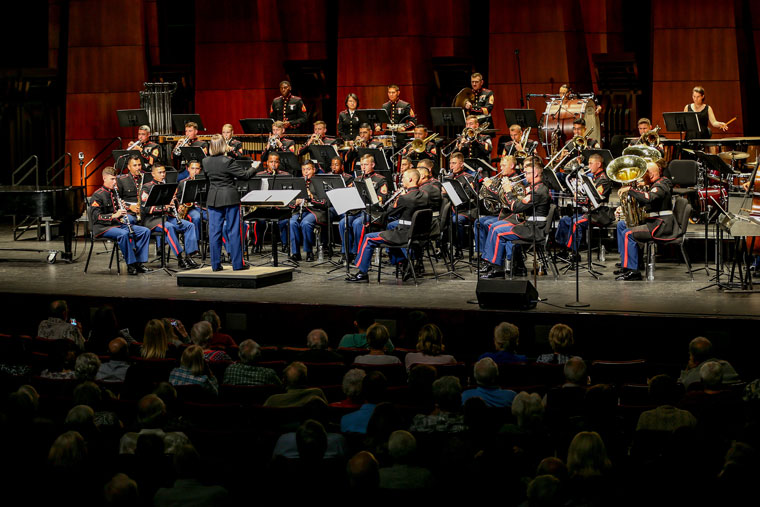
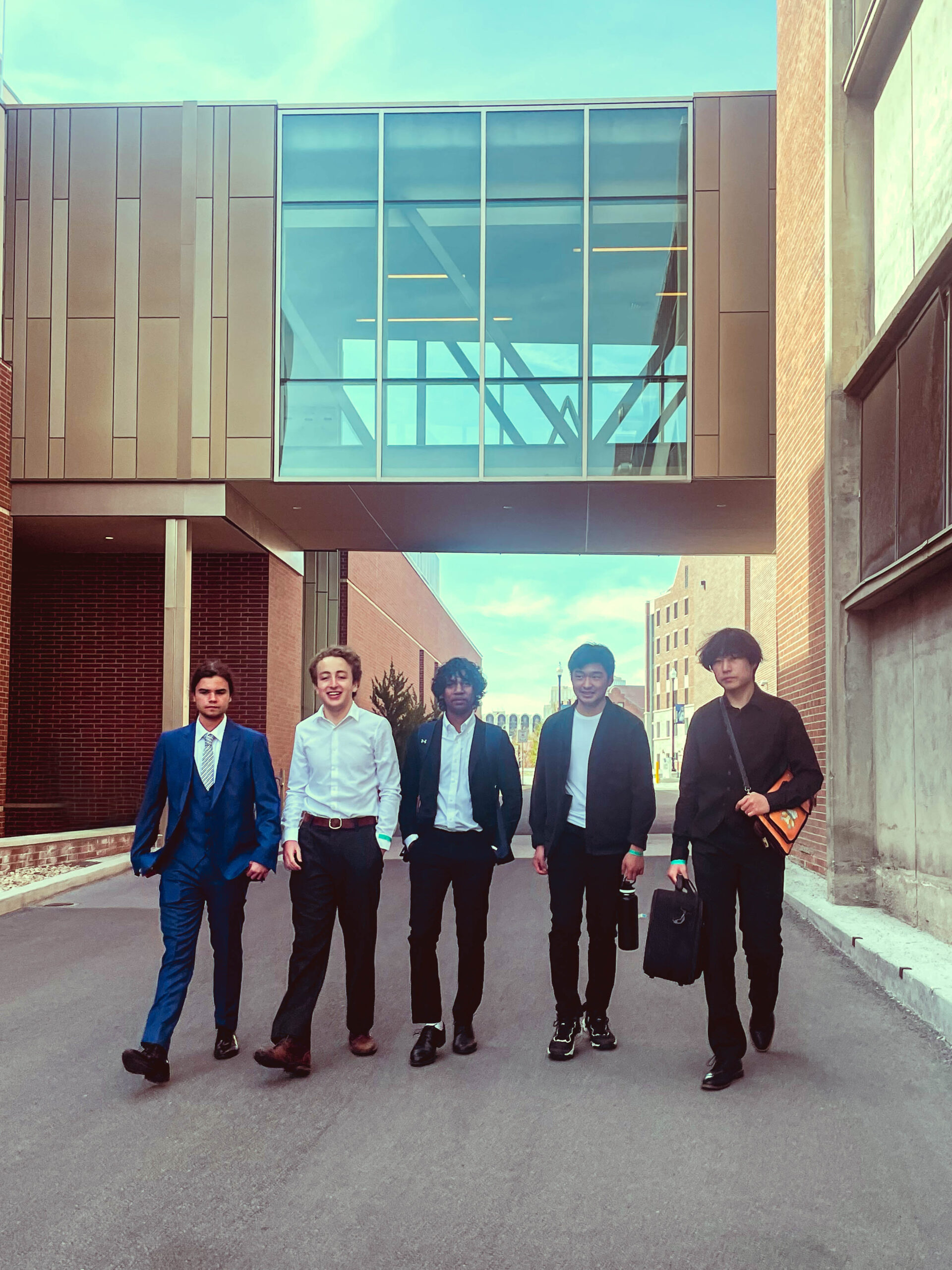
The Town Crier had the opportunity to catch up with Idyllwild Arts Academy (IAA) Jazz Faculty member Paul Carman this week. He and his students recently returned from one of the high points of their year, the trip to the Reno Jazz Festival. This tradition for jazz educators across the West is now in its 61st year, and like many things in the world, it has returned in a new form after the limits imposed by the pandemic. This year, over 100 student ensembles participated, and IAA was again among them.
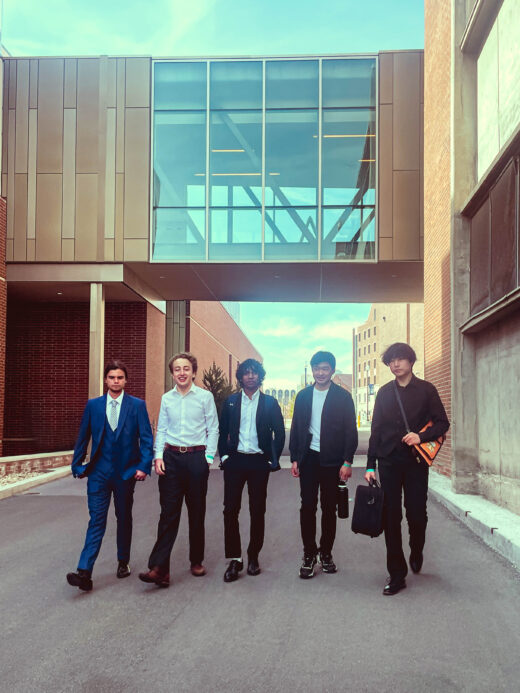
PHOTO COURTESY OF IDYLLWILD ARTS
TC: Is the academy getting back to a normal program?
PC: Yes, it’s been back to normal for a while. There was one year that was teaching Zoom-wise; actually just one semester and-a-half that was really screwed up. Obviously, you can’t teach ensembles on Zoom, so I was giving them recording projects. Other classes, academics, I was doing by Zoom. We had to do two sessions a day. Our students are all over the world, so I would have to do those classes twice a day, one time for Eastern Hemisphere, once for Western Hemisphere.
TC: The new thing this year is going back to Reno?
PC: Yeah, the Reno Jazz Fest didn’t happen for two years because of COVID. Then the third year it was going to happen, and they ended up doing it virtually, and we participated virtually; we sent in videos of our ensembles playing. Those videos got looked at and judged.
TC: Weak tea for a live performance medium?
PC: They were doing the best they could. The other thing about the Reno Jazz Festival is it’s not just performance competition. There are also workshops and master classes to participate in, by world class jazz musicians.
PHOTO BY JACK CLARK
TC: That’s happening again?
PC: That happened this year and we were there in person.
TC: Is there anything that stands out about those workshops?
PC: They were all outstanding. I went to as many workshops as I could fit in. You can’t go to them all. There will be like three on Saturday. Everyone I went to was outstanding. Also, they have concerts; one by a vibraphonist, Joel Ross, the other by a trumpet player named Marquis Hill. Those concerts were very, very inspiring. They gave the kids an idea of what’s happening on the cutting edge of jazz right now.
TC: New places to go?
PC: It’s amazing. And both of those men also gave master classes that were incredibly inspiring.
Carman explained the biggest change in the festival: “The Reno Jazz Festival used to be competitive, and you would win trophies; first, second, third place, other categories, outstanding improv, best sax player, etc. … I don’t believe that music should be competitive; it’s not like a football game. Because of that, I tried to not take my students to these festivals. But I decided it would be good for them to have the experience of playing under pressure. That simulates what actually happens to professionals. Like in a recording studio, the red light goes on, pressure. When we used to go to this festival, when it was competitive, we would always win first, second or third place. And about five years ago the festival tried to go noncompetitive. They polled all the jazz directors that had attended in the past, and the majority liked the trophies, the accolades to bring home. They didn’t feel the same way I did about competition in music. The faculty at University of Nevada at Reno are very modern, very forward thinking. That was about five years ago. Then we got COVID. They took that as their chance to change it; when it came back it was not competitive.
What they did instead was expanded what they call feedback sessions. You would perform and then you would get feedback from the judges. The sessions used to be brief, 13 to 15 minutes. They expanded that to about 35 minutes. The judges were able to go into much more detail in their feedback to the performing groups. These judges are all top-notch, world-class educators. My combo got feedback from two very accomplished, very good jazz educators, other than me.
TC: These things mean more when a stranger tells you.
PC: Yes. It’s not competitive, but that doesn’t make it less pressure. They are still playing in front of three judges that are scribbling while they are playing. They can see them.
Carman mentioned another benefit of the festival: the reality check. “The kids are isolated up here. Obviously, we get very good musicians up here, but they don’t always know it; they don’t get to hear their peers. They don’t usually get to hear other high school musicians.
When they do, it helps their confidence. Several times my students came up to me and said, “I heard this high school combo, and they weren’t that great.” They are surprised at the level. They don’t realize where they are, in the top 10% of high school jazz musicians. This all just helps their confidence. To think of being a professional jazz musician is daunting. They ask themselves, “Can I do this, can I really do this?” I always tell them “Of course you can,” and they can hear me say it over and over, but until really hearing their peers do they realize, “I’m doing pretty good here.” Then their confidence level starts rising. That is more powerful than me saying it.
TC: That’s another kind of educational experience?
PC: A confidence booster.
Carman underlined the role of the pressure a festival exerts on young players. “Back to their performing and performing in front of judges that have never heard them before. I’m the only one who knows how they performed under pressure. I’m the one who was there during the last few rehearsals. I tell them, “Instead of going for trophies, listen to me tell you how you did under pressure.” I’ve been doing this festival for 13 years. They always rise up under pressure, they always play just another notch better than they did at their last rehearsal. That thought I had years ago, “I’m going to take them to this thing, concerts, master classes, and it will be a good experience for them to play under pressure,” and it is. When they become professionals, I want them to have that behind them. They’ve got to get it right. These festivals simulate those high-pressure situations.
TC: Back to the recovery of normalcy, what about your program overall?
PC: It’s smaller; due to COVID our whole school is smaller. Our Jazz Department is just seven students, normally there’s 12 to 15.
TC: You were always a lot smaller than the schools you used to compete with, right?
PC: We competed with high schools that had 3,000 kids. The jazz combo of six kids is selected from 3,000 kids. The jazz combo is always the best kids.
TC: There has to be a happy medium, but there are also advantages to a small program?
PC: One aspect of the return is that our department is smaller and growing, and will be back to its normal size. There are some positives, more individual attention. For example, we have one saxophone player in the department. He would normally be playing in our upper-level combo, but that leaves the other group without a lead instrument, so he is playing in both combos. But that’s cool for him. He’s learning twice as much material in every concert cycle. For him it’s a benefit.
TC: Like real life for a working musician?
PC: Yeah. This happened last year. We had one bass player. He played in both ensembles. It was a positive experience.
TC: It’s an incredible life you’re living.
PC: Yeah. Oh, I am blessed. I moved up here to raise my small children in a small town. I didn’t even know the school was here. I commuted off the Hill every other day for three years to do my gigs in LA. I was teaching at Cal State Fullerton. I found out about the school, the school found out about me. Now I’m working there five days a week. I’ve always loved teaching, and now I’m teaching at one of the most amazing schools you could possibly think of. My kids are grown up, 22 and 21. I’m gonna keep teaching until I fall over. I’ll be like Marshall [Hawkins]. I’ll keep going. Like most musicians, I don’t have a retirement plan. I don’t want to retire. I can’t imagine what retirement would be like for me.
Carman added an appreciative note to the IAA. “One more thing: This was a stretch financially for the school to send us. I want to thank the school for seeing the value of this experience and doing what they could to make it happen for us.”