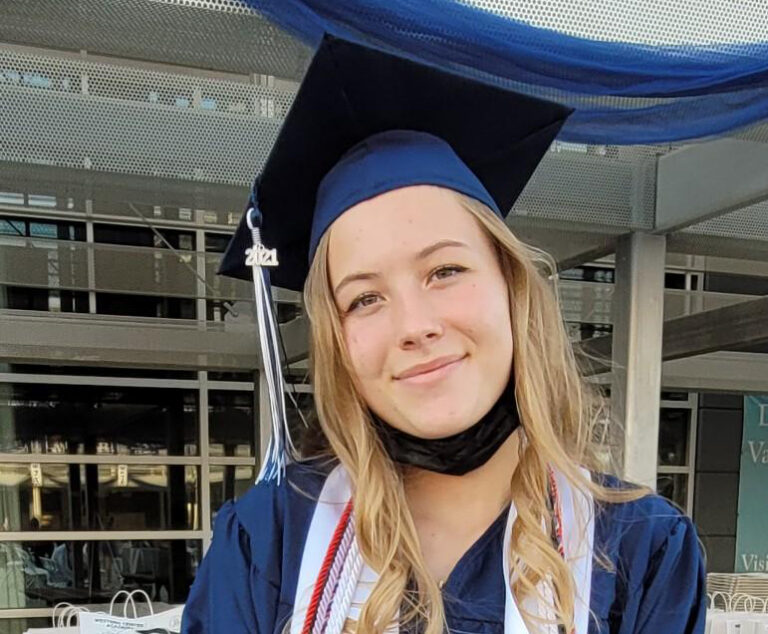
Nathan Masters is a recent Idyllwild transplant. He and his wife Kseniya
Melnik are both writers. Master’s just won the Mystery Writers of
America Edgar Allan Poe Award for “Fact Crime” for his first book,
Crooked:The Roaring ’20s Tale of a Corrupt Attorney General, a Crusading
Senator, and the Birth of the American Political Scandal. The book is
non-fiction, but borrows from the mystery writer’s tool kit to present
its story. About the award, Masters says “I consider it a tremendous
honor; past recipients have included Truman Capote, David Graham, Eric
Larsen… the biggest names in best selling non-fiction.”

Photo by Aslan Chalom.
Masters may already be familiar to readers who watch PBS; he also writes
and hosts Lost LA, a co-production of USC Libraries and Public Media
Group of Southern California. The Crier spoke with Masters and began our
interview there.
TC: The USC Library website calls Lost LA “ a unique collaboration
between an university library and a public media company.”
NM: Yes, unique. There’s probably not another series co-produced by an
academic research library. it’s an extension of the library’s role in
preserving and sharing the history of Southern California.
TC: What is your position with the USC libraries?
NM: I’m not a librarian or archivist but I work for the library in
public programing. My job is to talk about how important library
collections are.
TC: You work at USC as a writer or researcher?
NM: As a writer. They hired me to write about collections, services and
programs. One part of that was writing about California history, a
series of articles using images from the USC libraries collections, and
also from collections and archives across SoCal. That first series was
for the website for KCET, now known as PBS SoCal.
Lost LA presents the history not just of LA, but of the southland and
California through a local lens, with different stories requiring
different methods of research: one episode tells the stories of three
people who lived through the transition from Spanish colony to state; in
another, visits to the graves of the rich and famous uncover the role of
segregation in the development of the region. The series starts with an
exploration of the natural world that white settlers encountered here,
and how they changed it.
TC: The series uses a lot of different techniques to tell different
kinds of stories?
NM: The program has changed over the years, in the first season we were
interested in showcasing different forms of documentary storytelling.
The initial concept for the show has evolved into a hosted format, like
a travel log. As the host I take viewers to different locations.
TC: What drew you into the long form, writing a book?
NM: Yeah, what led to giving up 5 years of my creative life for a single
project? I’d always wanted to write a book since I was a little boy, but
I just took several decades to figure out what kind of book. Eventually
I was drawn to the idea off writing a narrative non-fiction thriller,
set in the past. Its frankly the kind of book I like to read, I thought
‘Why not write one myself?’
TC: How did you come to this subject?
NM: I started working on this around 2019. I was trying to think of
historical precedents for presidential administrations that were plagued
by scandal. I naturally came upon the administration of Warren Harding,
about a hundred years ago, one of the most notoriously corrupt
presidencies in American history.
TC: Teapot Dome is part of the book?
NM: I started reading about the Harding administration, it turns out
that Harding himself was not corrupt, not complicit in any of the
corruption during his administration, but I did come across his attorney
general, who was up to his ears in corruption.”
TC: Harry Daugherty.
NM: Yes. I came across Daugherty, then I found the story of a crusading
freshman senator [Burton “Boxcar Burt” Wheeler] investigating the
attorney general, and just as he is closing in on the truth he finds
himself in the crosshairs of the department of justice. When I got to
that part of the story I thought “now there’s a book!”
TC: So you had a villain and a protaganist?
NM: There are many other fascinating characters in the book, J. Edgar
Hoover is another major character. Con artists, bootleggers, the 1920s
was a colorful time in American history.
TC: And there’s a murder too?
NM: At least a suspicious death. I started the book out like a good
mystery novel, and what better way to start a mystery than with a dead
body?
TC: The Edgar Allen Poe award recognizes that?
NM: It’s especially gratifying, a big part of my research was reading
mystery novels and learning from the masters how a mystery should unfold
on the page, when to reveal information, how to keep the reader on the
edge of their seat.
Do you want to give a shout out to some favorite mystery writers?
NM: I’m an LA guy, so Raymond Chandler, Michael Connelly, Ross
MacDonald, of course Daschel Hammit, James M. Cain who wrote Double
Indemnity and The Post Man Always Rings Twice, I could go on and on…
TC: How did you come to Idyllwild?
NM: We moved here during the heart of the pandemic, in 2020. I’ve always
been a mountain person, I used to come up here by myself. My wife and I
were living in Los Angeles and going stir crazy during lock-down, as I’m
sure a lot of people were. We wanted a change of scenery. It was always
my dream to live in the mountains. It was a bold move but we did it, and
couldn’t be happier with the decision..For a writer it’s a bit of a
cliché to live in a house in the woods, but it does help with the
creative process. My wife is a writer too, a fiction author who also
writes for television, so we’re living that cliche together.
Crooked:The Roaring ’20s Tale of a Corrupt Attorney General, a Crusading
Senator, and the Birth of the American Political Scandal is published by
Hachette Books.
Lost L.A. is available wherever video is found, YouTube, PBS Passport
app, and other streaming services. “We make it easy to find, we are
public television.”