This week, the Town Crier spoke with two board members of the Idyllwild Climbers Alliance, a local all-volunteer 501(c)(3) nonprofit with the mission of preserving, protecting and enhancing the climbing experience in the San Jacinto mountains through conservation, stewardship and education of all who come to experience the unique, historic values of the area. This last year the group has been engaged in a concerted effort to build the organization and reach out to climbers and prospective climbers.
James Verhague, president, and John Jacobs, board member, told of the history and activities of the group, and their own involvement in climbing and the Alliance.
Jacobs joined the ICA two years ago, and has served on the boards of the Idyllwild-based Boojum Institute, Friends of Joshua Tree, and San Diego Mountain Rescue Team. He explained how ICA fits into the larger landscape of rock climbing. “The ICA is a local climbing org, an LCO, within climbing advocacy, one of many across country. The partnering organization is the Access Fund, we are an Access Fund affiliate. They have been around over 40 years.”
Verhague told of the beginning of the organization. “ICA was started by Jim Pinter-Lucke, who, unfortunately, just passed way in September. He wanted locals to take over, the torch passed in the last five years.” Pinter-Lucke was a Claremont resident who spent a lot of time on local climbs.
Jacobs said of Pinter-Lucke that “he was a long-time climber in the local area, a member of the Tahquitz/Suicide Rock climber community. He started ICA because there were issues around access and climber resources.”
The Access Fund had already addressed one issue in Idyllwild. “The Access Fund was originally involved in the 1990s with the Suicide Rock climber trail. The original trail went across a creek and cut through or close to private land. Landowners did not like that. The Access Fund helped negotiate with the Forest Service to create a new trail in its current location.”
Idyllwild, the two climbers tell us, is unique both for the physical quality of its rocks, (“fantastic,” “Yosemite-quality”) and for its role in the development of the sport. Jacobs pointed out that Idyllwild figures prominently in the history of climbing, and sharing this heritage is also part of the group’s mission. “Tahquitz and Suicide Rock played a critical historical role in climbing. The rating system was developed here at Tahquitz. People call it the Yosemite system, but it was developed on Tahquitz and was originally known as the Tahquitz decimal system. The first 5.8 and 5.9 climbs were done here on Tahquitz.
Verhague notes those were “cutting edge climbs, the most difficult at that moment,” in the 40s, 50s, and 60s. Jacobs adds “because of this history we feel it is important for group like this to exist, grow, and expand.”
“As climbing was developing in the US in the 30s and 40s, Tahquitz was central. Techniques now used worldwide were developed here. People think of Yosemite, but those people who made names for themselves in Yosemite, like Royal Robbins, started here.”
Verhague also pointed out that several favorite bouldering areas can be found within the San Jacinto Mountains, in particular Black Mountain. Bouldering, for many, is an entry into the sport. Jacobs added that in the last 20 years bouldering has been the most significant area of influx for new climbers, being both highly social and requiring minimal equipment.
Jacobs underlines that the main focus is still on the technical climbs. “The primary value of climbing up here is longer traditional routes involving multiple rope pitches, protection and hardware, and a strong mind. In SoCal it well known for that. It’s the climbing ethic up here.”
The members of the group, the “Allies,” are the volunteers that do a lot of the work. “We’re just a structure within which they can operate.” There is a Board of Directors; a number of supporters that have areas of expertise; partners like land managers—the San Jacinto District of the USFS in particular; and sponsors that provide financial support directly or indirectly. All board members are local residents. “We are 100% volunteer.”
The group has invested time during this last year to raise the visibility of the organization, using social media, Instagram FaceBook and most recently a new website. “Our yearly events involve trail clean ups, one scheduled for June 13. Some of the more recent projects completed included the retaining will along the Suicide Rock climbers trail, and graffiti removal.” The website includes a signup form for the upcoming Trail Cleanup, aka “Climbers Festival.”
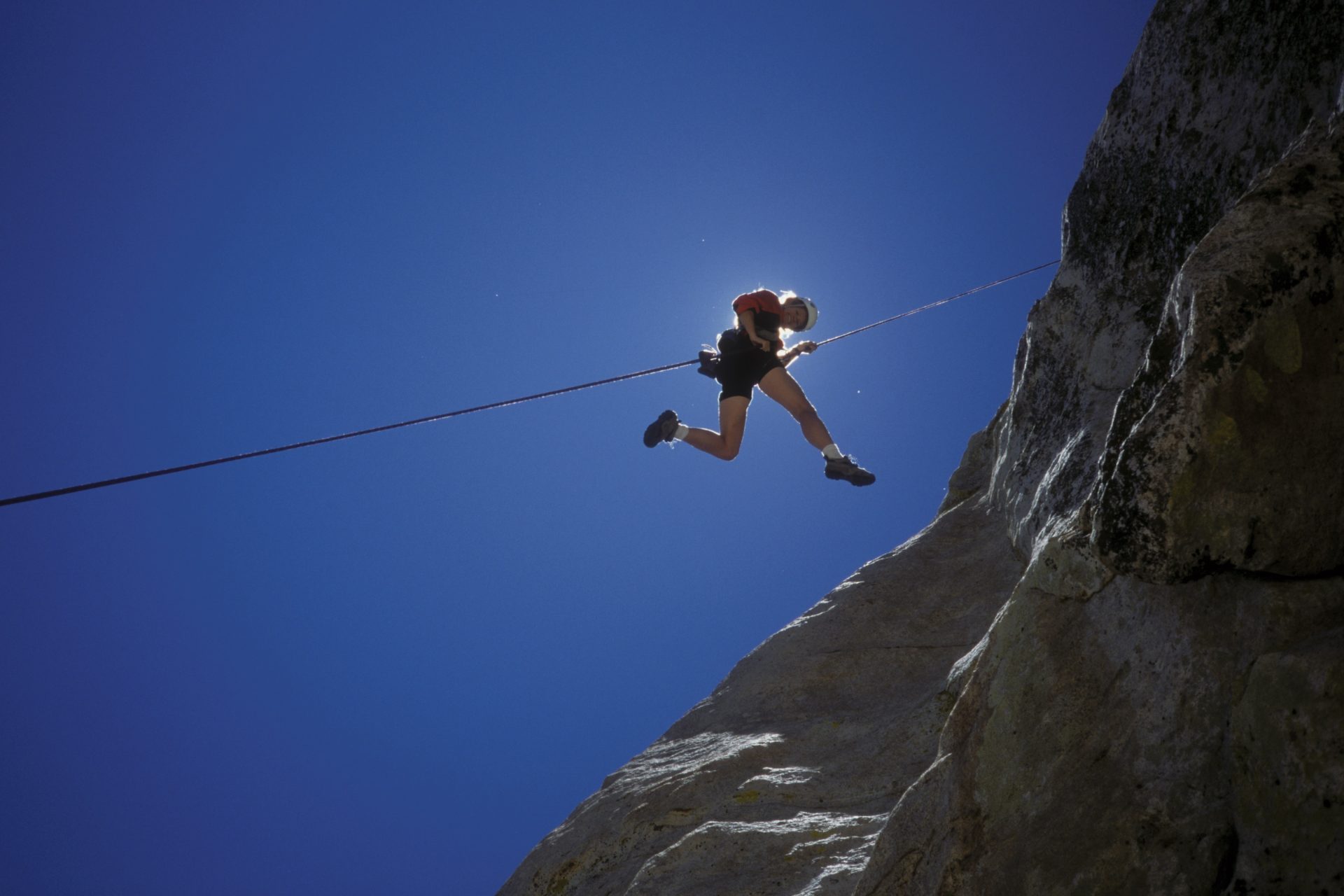
The website includes information on the ICA’s history and mission, local resources for visiting climbers, a donation portal, and tells how to become involved. It contains dramatic imagery from photographers like Bob Gaines, Kevin Powell, Greg Epperson, well known within climbing circles.
Verhague notes that ICA helps climbers network but does not directly offer teaching or apprenticeship. They encourage the use of “legitimate commercial guide services in the area.” Guides, Jacobs added, “should be properly commercial permitted with the Forest Service, insured, and accredited with the American Mountain Guides Association (AMGA) or Professional Climbing Guides Institute (PCGI.)”
The group’s revenue comes primarily from auctions of gear and equipment donated by sponsors, and private donations. As the end of the year approaches, many think of charitable organizations and how they can make an impact with their contributions. ICA asks those seeking worthy causes to “please” consider them. The group is also seeking people who can help in a variety of different support modes, in the field, and organizationally.
To learn more, visit the website: Idyllwildclimbers.org