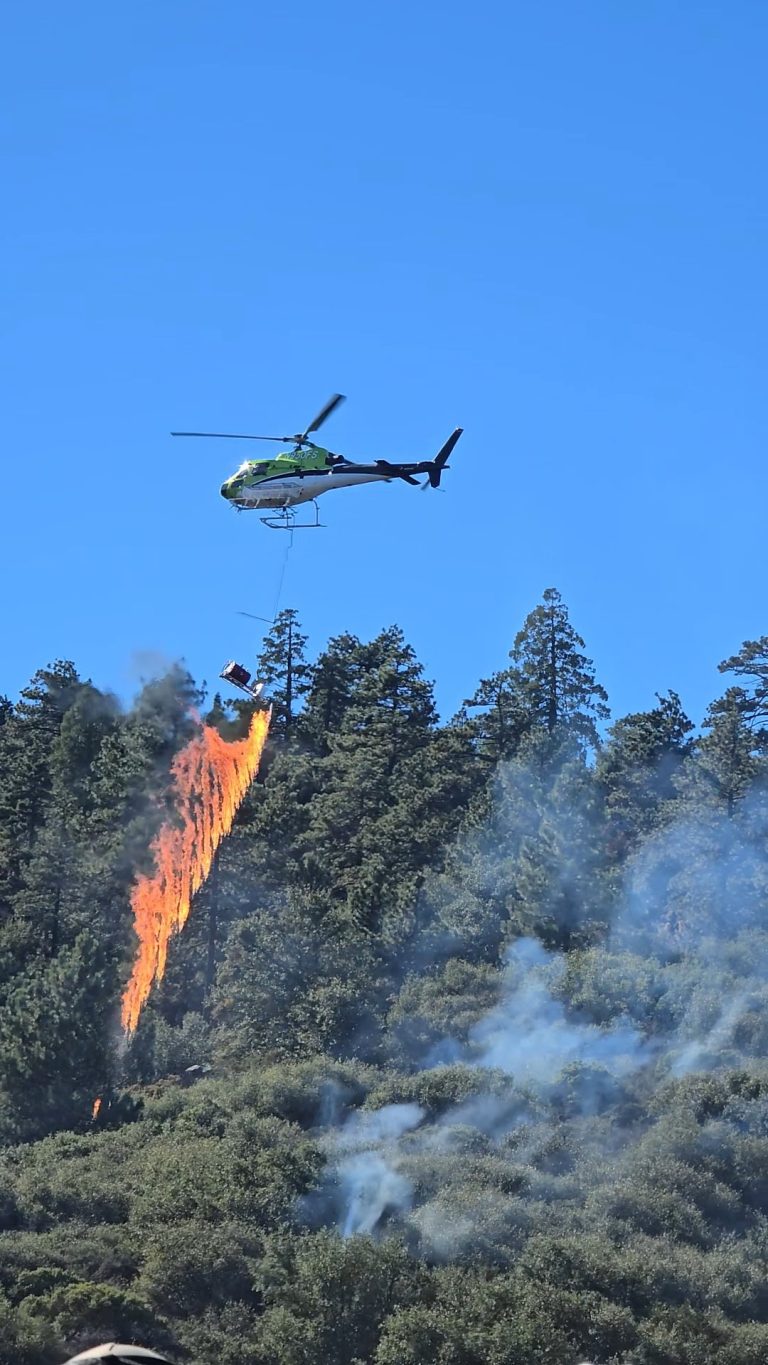
Prescribed Burn begins on Thomas Mountain
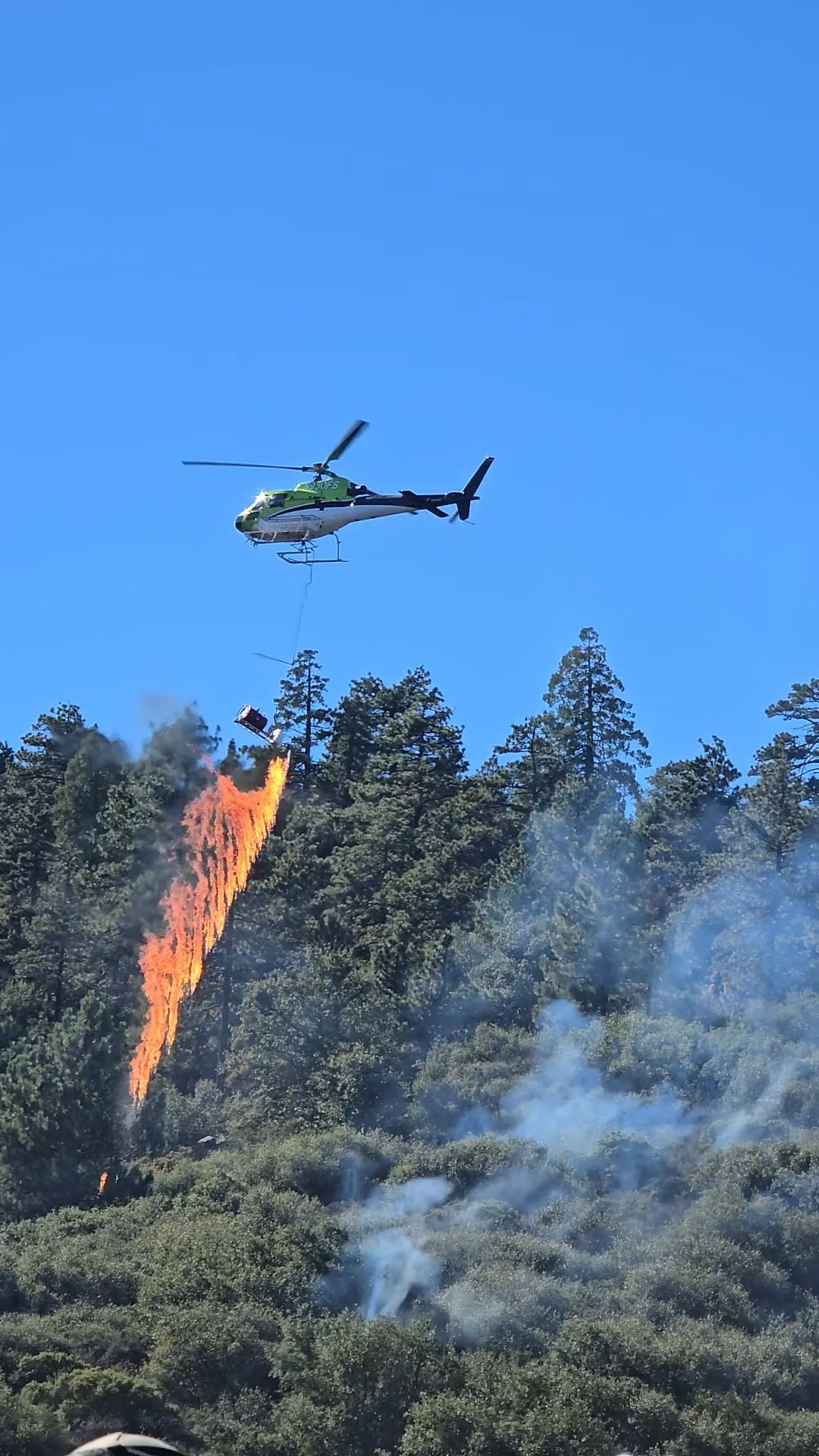
On Monday, November 9, approximately 174 firefighters from the Forest Service, Wildland Fire Service, Idyllwild Fire Protection District and other agencies gathered at the Kenworthy Forest service station for a briefing before beginning a prescribed burn on Thomas Mountain.
The burning is expected to continue until Saturday, Nov. 14 and to cover approximately 2,500 acres on the north side of Thomas Mountain, a landscape-scale fuel reduction project. This area is directly across Highway 74 from Morris Ranch Road.
A forest service press release noted that motorists should expect occasional closures as heavy machinery is moved into place, and anytime the helitorch crosses the highway. Smoke may also affect visibility.
Closures are expected on Thomas Mountain Road (Forest Service Road 6S13), Tool Box Springs, Thomas Mountain yellow post campsites, and the Ramona Trailhead.
Forest Service Captain John Fakehany, in a phone conversation, had explained that much of the area they would be treating had not burned in 50 years. That morning, the assembled men and women heard that since that time, many new homes had been built on both the Anza and Garner Valley side of the mountain, and the safety of these communities would be at stake.
The fire would be set by helitorch, a device suspended from a helicopter that pours and ignites gelled gasoline. The terrain would be too difficult for ground crews to enter, and so pilots would seek out snags and tangles of dry fuel to ignite, with ground crews containing the fire in a mosaic pattern. Fakehany said that a few years ago the skill set to operate this way was disappearing, but crews are relearning.
On Monday morning, the assembled crowd was asked how many had worked on a burn with a helitorch. Most raised their hands. They were reminded that when the Thomas Mountain burns began, almost no hands were raised
Forest Service Chief Chris Fogle explained that the goal was 10 to 30 acre black spots in the chaparral, a mosaic pattern with 30 to 70 percent consumption, ideally 50 to 60 percent. The ground crew would ideally just be there to watch as the fires extinguish themselves.
They would be taking advantage of seasonal conditions: short days with cooler temperatures and higher relative humidity, recent significant rain, (three weeks ago 2 inches, then almost another inch last week) which has left a lot of moisture in the ground and the duff.
There are two different kind of landscape on Thomas Mountain, chapparal and timber. Fogle explained that the moisture level in the timbered area was “above the moisture of extinction” and would not burn readily. The burn would thus be restricted to lower elevations.
Mark LaMont of IFPD told the assembled firefighters that patience and good communication would be essential. If those tasked with “holding” the fire are having any difficulty keeping pace with those “firing” they must communicate that so they can slow down.
IFPD Batallion Chief Daniel Diaz spoke about “holding.” In the case of the section they would be working on that day, a bike trail was a primary containment line, with Thomas Road behind it the secondary and the Ridge line behind it the tertiary line.
The fire weather forecast emphasized that with high relative humidity and fuel moisture, the burning would be limited to late morning and early afternoon, with overnight conditions expected to “put things to sleep.” Winds were expected to be very light off shore flows, but crew members were warned that sheltered drainages could see varying wind directions, usually upslope during the day.
There was also a readout of the purpose of the work: to reduce fuel loading and potential future fire intensity and behavior from large and intense wildfire; provide for resource and community protection by maintaining a variety of fuel age classes; to reduce wildland fire behavior and associated crown fire in the shrub and mixed conifer stands; to manage forest stands surrounding and within California spotted owl habitat and Quino checkerspot butterfly habitat; provide recreation opportunities that are safe and in compliance with Forest Service rules and regulations; reduce the threat of wildfire to flora and fauna that inhabit the watershed; provide forage and improve wildlife habitat by removing excessive vegetation and encouraging new plant growth.
On Tuesday morning, November 10, IFPD public information officer Amanda Munsey reported that about 120 acres had been confirmed burned on the first day, with the number expected to rise as crews were able to assess the situation on the ground.