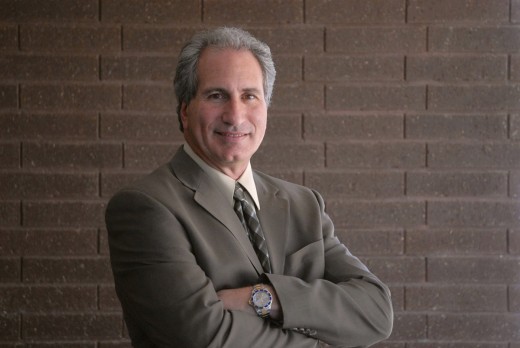


Editor’s note: Chad Hanson, Ph.D., is the director and principal ecologist for the John Muir Project in Big Bear City. He spoke at the Idyllwild Library on Oct. 16 about “The Effects of Post-fire Logging on Wildlife Habitat.” Although the Town Crier could not attend his presentation, this story is from an interview with Hanson.
“My message was to focus attention and resources to protect homes form wildland fires,” Hanson said. “I want to help ensure homes are safe.”
He believes more homes can be protected through greater information about wildfires, financial assistance from the federal and state governments, and a shift in means of protection.
“Backcountry fire suppression and logging programs are not protecting homes from damaging wildfires,” Hanson argued. “More private property can be protected with greater emphasis on defensive space within 100 feet of structures. This has proven to be extremely effective.”
Hanson is not opposed to logging per se, even on public lands. “Not every forest management program is logging; some are close to cities.” But he recommends more attention to the size of the trees being removed.
“Whether it’s logging or non-commercial removal, the basic message is the same,” he stressed. “Focus on homes and defensive space. Science tells us that whatever is done beyond 100 feet has little additional
effect on whether a home burns.”
Hanson said he and Dr. Richard Minnich of the University of California, Riverside, are in general agreement about the beneficial effects of natural fires. One of the benefits is creating habitat for local species. “[Natural fires] burn at low or moderate intensity everywhere; all trees depend on this. Different groups of species depend on changes for territory. Forests re-generate over time.
“We don’t need to think of the fire as destroying the forest,” he added.
Both Hanson and Minnich feel that the intense efforts to stop and extinguish every fire in the backcountry has unintended consequences. Stopping all fires, especially far from human habitat, increases the possibility of lightning strikes and more fires.
When fires are close to or approach a town, such as the Cranston Fire, Hanson clearly wants to stop and suppress these fires. But he opines that more protection needs to be done in towns to create and to maintain defensible space, which will protect homes.
He prefers to see the funding for logging on national forests or in national parks to be redirected to community groups, such as the Mountain Communities Fire Safe Council, that will help residents create appropriate defensible space.
Hanson also would discourage fire suppression in roadless or wilderness areas, which he characterizes as “outdated and incorrect.”
JP Crumrine can be reached at jp@towncrier.com.