


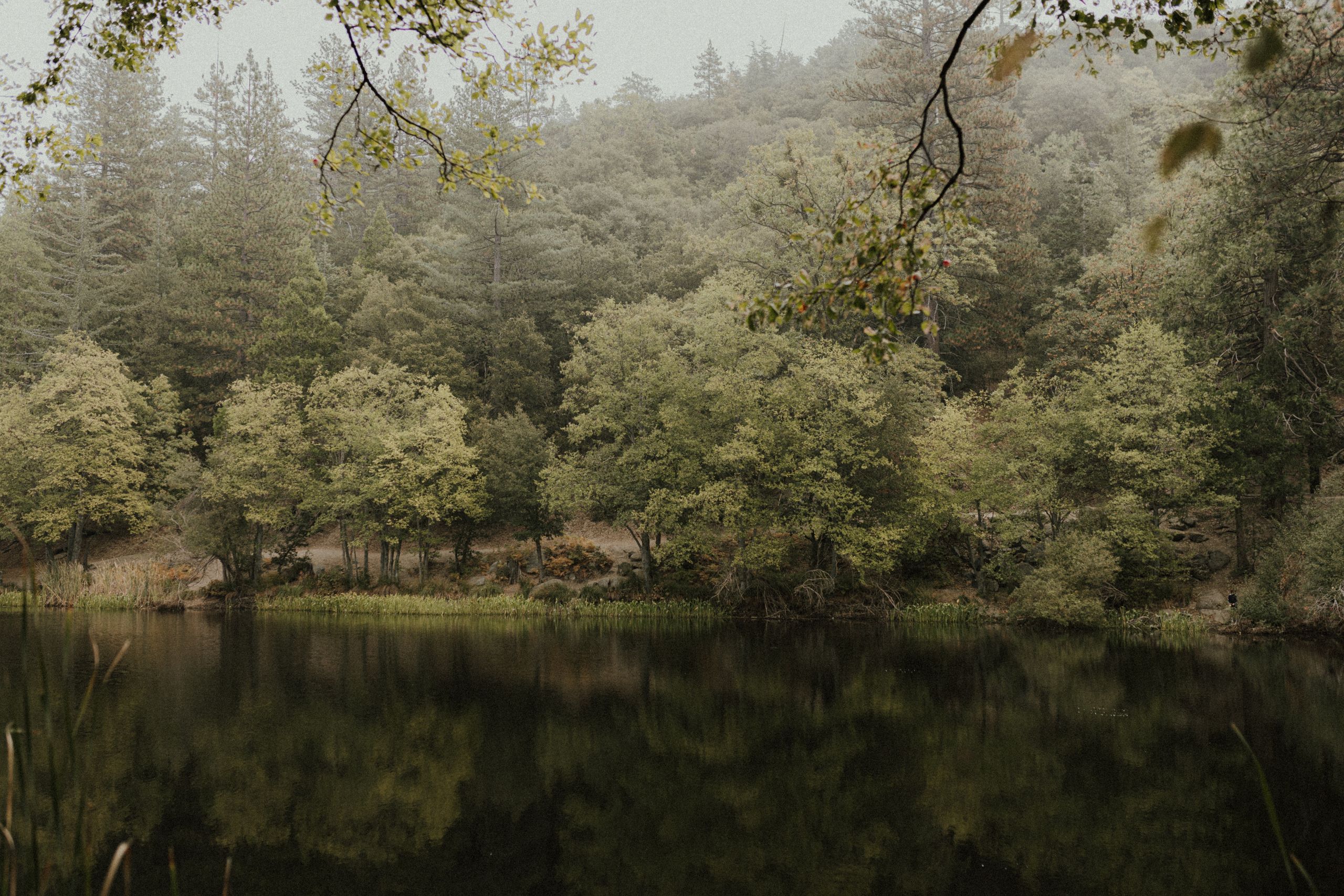
Looking back to the beginnings of Idyllwild, we can see certain threads and tensions that have always been here. The values of a quiet, secluded community of families and retirees, and the values of a thriving tourist destination. The plans of developers and the cautions of environmentalists, or as they were known, conservationists.
In recent decades we have seen not so much new building as repurposing of existing stock. The COVID-era STR boom utilized the cabins and second homes that had historically been used a few weeks a year. The reshaping of Tahquitz Pines from a church camp to a resort added hundreds of beds to local accommodations without increasing the construction footprint.
Looking back on the causes that conservationists took up is also instructive. In the post-World War II era, the Izaak Walton League was the most visible organization that took up the cause of protecting the forest that surrounds us. They also worked to open that wilderness up for recreation, but in a selective fashion.
The Idyllwild chapter of the IWL partnered with government agencies and other local organizations to repair trails and maintain access for hikers and horse riders, replant trees where fire had occurred, build ponds along Strawberry Creek, and encourage stocking the creek with fish for angling. They debated the virtues of introducing beavers and redwoods into our ecosystem, and tried both.
The local chapter of the IWL emerged out of the meetings of the Idyllwild Chamber of Commerce, which had a conservation committee and a mission far beyond what such organizations usually do.
The Chamber was created as a familiar type of nonprofit for the day, the kind of organization that government officials would recognize and listen to. It could boast that it was at one point the largest in the county, largely because its membership did not consist only of businesses, and its mission went far beyond encouraging commerce. Its first big task was the construction, with volunteer labor, of the Town Hall, as a site where locals could meet, recreate, and build community.
The Chamber experienced tensions between those who joined to support local recreation and those who sought to promote tourism, and between those who wanted to keep a “dry” town and those who wanted to sell and serve alcohol. For a brief period starting in 1956 there were two Chambers, with those more aligned with Leigh Dutton’s Bear Flag Festival splitting off.
Periodic droughts led many to be concerned about the ability of local water districts to provide water for new development. This played out in the pages of the Town Crier, especially in 2016.
It turns out that locals could learn to conserve water, and while we see more people around us, we see water consumption steady or even declining slightly. The wells fall in dry years and come back with rainy ones, and none of the three districts seem concerned about their long-term ability to serve their customers.
Fire has been the biggest concern here, more so in the new century. Our history is full of grand landmarks consumed by fire, and those who have lived here more than a few years have experienced multiple evacuations. The rising cost of fire insurance is a symptom of an underlying lack of planning: it was fine to develop communities in a forest without what we now call a “sustainable” strategy for keeping them safe from fire.
Meanwhile a rigid approach to wildfire across the country led to the buildup of fuel, and increasingly frequent catastrophic wildfires. We are beginning to see the fruits of a decades-long push in California to ramp up fuel reduction projects including controlled burns.
We have long heard language about “federal, state, local and tribal authorities,” but we hear little from the last group. This seems to be changing. Tribes are finding ways across the state to perform cultural burns in cooperation with firefighting agencies. The Cahuilla in Anza have a Cal Fire-funded fuels crew.
The most interesting part of this is hearing tribal leaders and firefighters using the same language when speaking of the role fire plays in forest ecosystems. They also share frustration with what they see as an overly dogmatic protection structure. Yes, this land is inhabited by endangered species, but if small sections are cleared of brush or the understory is treated by fire, those creatures will move to adjacent sections and return soon to a more fertile landscape.
We must not pass lightly over the differences between the firefighters and the tribal authorities. Firefighters are fond of herbicides, which make longer lasting, greatly reducing the costs of maintenance. Native Americans, and many of the rest of us, have a different view of this and value the ability to use plants in the environment without encountering poisons.
Over a century, state and federal agencies provided fuel breaks around the mountain communities. A warming climate, drought, and air pollution weakened our conifers. Southern California Edison has removed more than 185,000 trees affected by bark beetles from Southern California mountain communities since 2003, either by hiring contractors or homeowners.
Our own Mountain Community Fire Safe Council removes many tons of dead, dying and diseased oaks attacked by the goldspotted oak borer every year.
In addition to CAL FIRE’s activities, Idyllwild is protected by two agencies, the U.S. Forest Service and Idyllwild Fire Protection District, whose local leaders have fostered a spirit of cooperation. IFPD, under Chief Mark LaMont, has built up the capacity to take on landscape-scale fuel reduction projects as the state has provided avenues for funding these projects. Some of this work, like that along the highway, we see every day. Other projects we see if we take a hike. Major projects have been neglected for years, and IFPD is looking to reenter them.
The present federal administration is doing much to eliminate the environmental protections that have been put in place since the 1970s. This includes the rescission of the 2001 “Roadless Rule,” which protects several areas on our mountain, one to the south of Highway 74 on the way to Valle Vista, encompassing the South Fork San Jacinto Wilderness and the Cahuilla Mountain Wilderness, and the other northeast of Highway 74 near the Santa Rosa Reservation and including Bald Mountain, Pyramid Peak and the Palm Canyon Wash.
There is an effort in Congress to codify the Roadless Rule into law, the Roadless Area Conservation Act. We see a consortium of environmental groups (including the Sierra Club, Cactus to Clouds Institute, 30×30 Power in Nature) encouraging citizens to speak to their elected representatives about the importance of preserving our wildlands, and choosing to emphasize the economic value of our wilderness to the business community that has grown up within it in this most urban of forests.
This highlights the importance of coalitions in getting anything done in a democracy. Householders, businesspeople, hunters and fishers, and conservationists formed them in the 1940s and still do today. All signs point towards another “swing of the pendulum,” as our political back-and-forth is often described. One of the smarter Democrats to have emerged in the last decade, Pete Buttigieg, has been saying that if Democrats gain the helm again, they will not be able to merely tape back together what has been broken, but will have to think long and hard about what Americans really want in the long run and how it will be paid for. Ah, if only humanity could somehow learn from experience
